

WifiRank
Crowdsourced internet speed rankings for Bangladesh
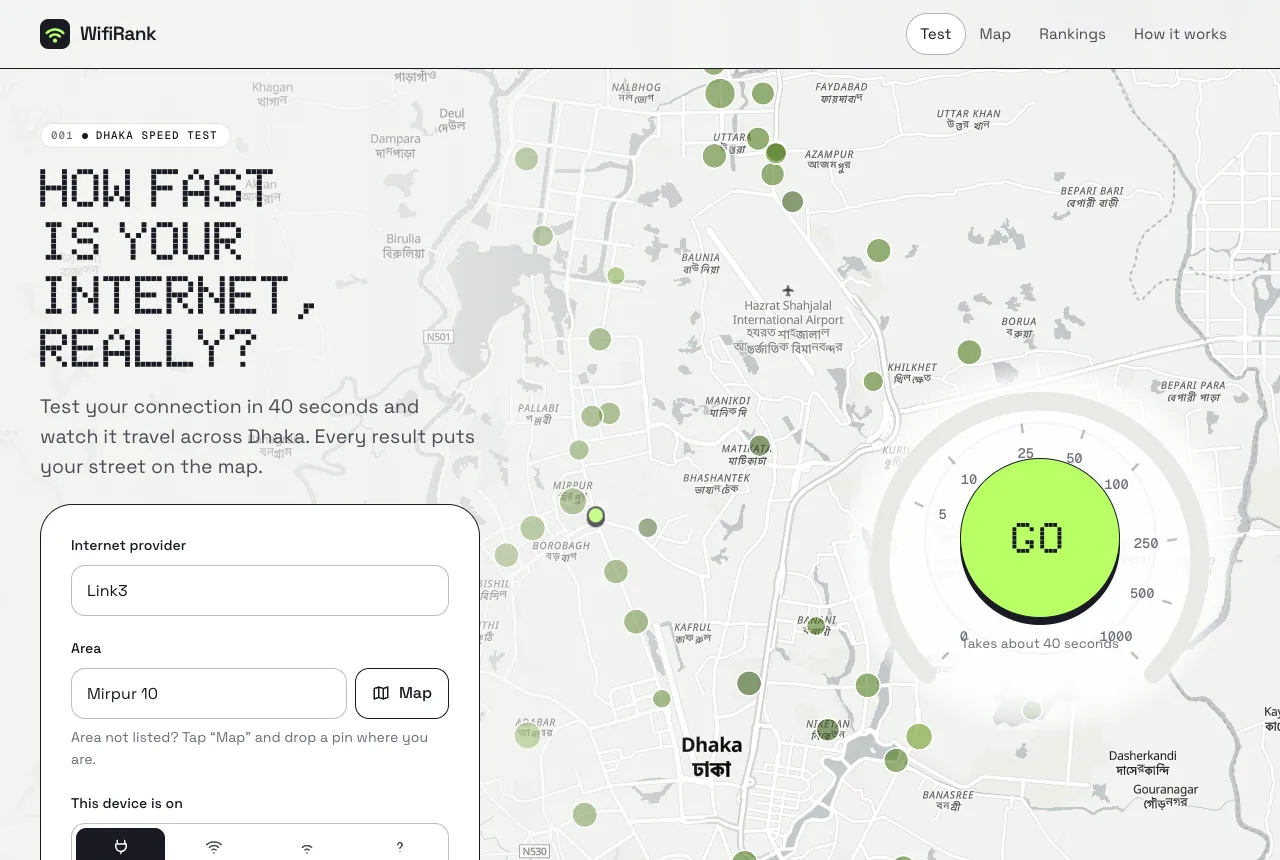
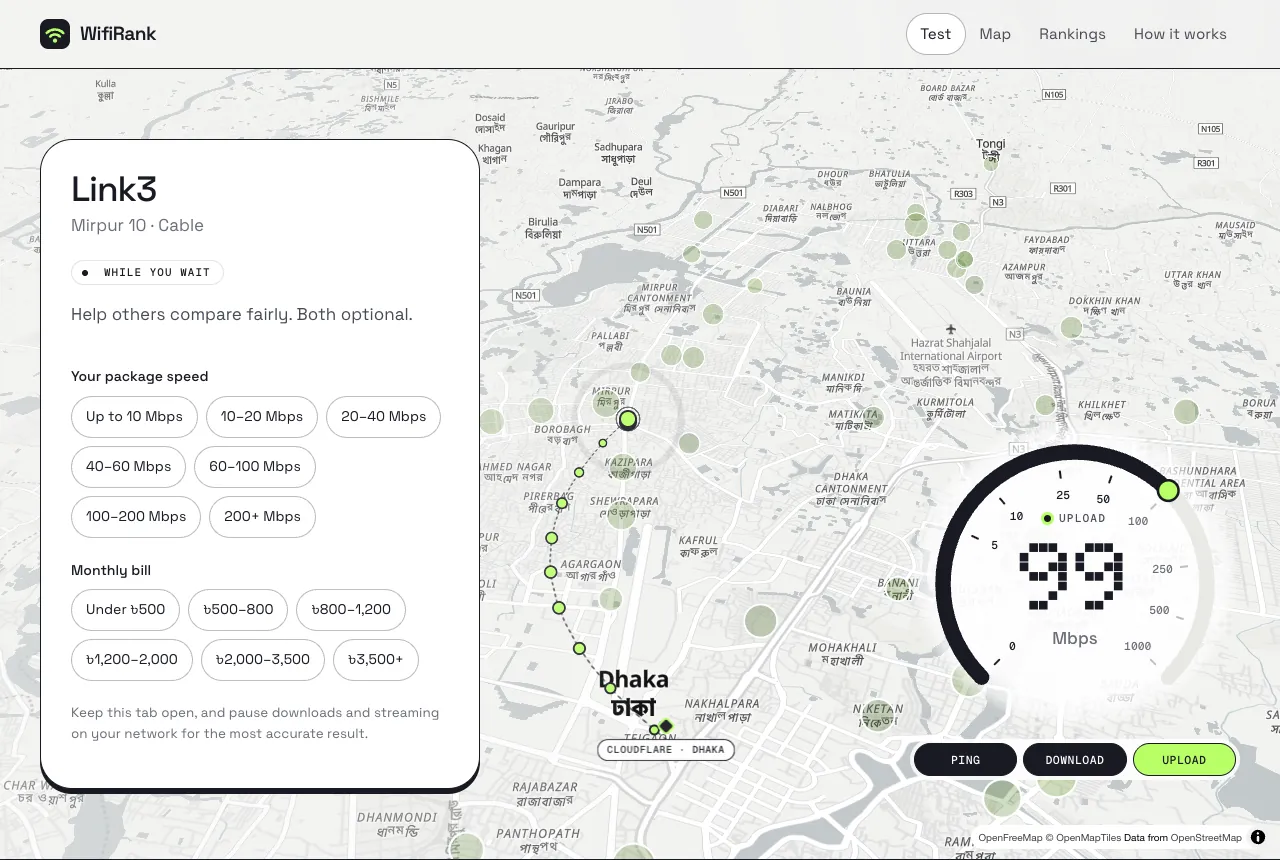
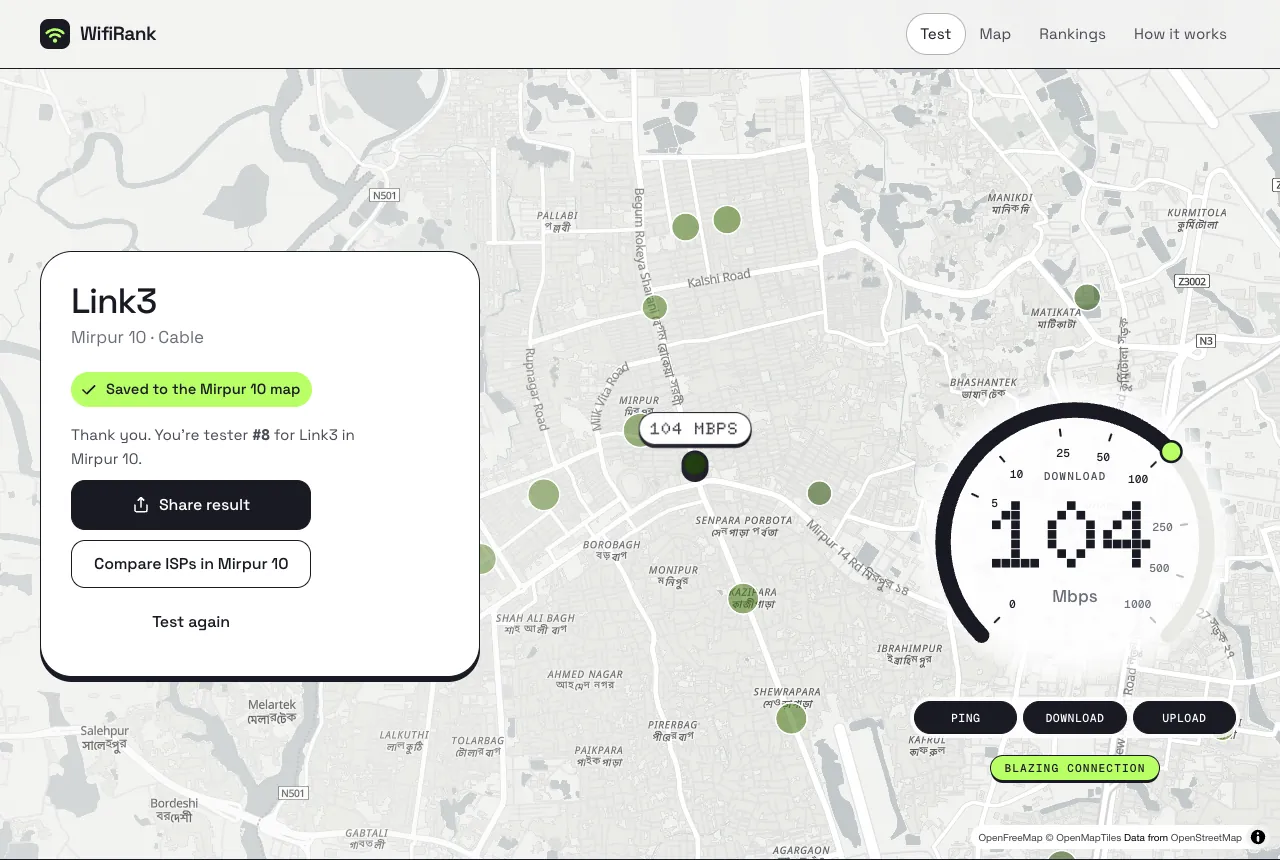
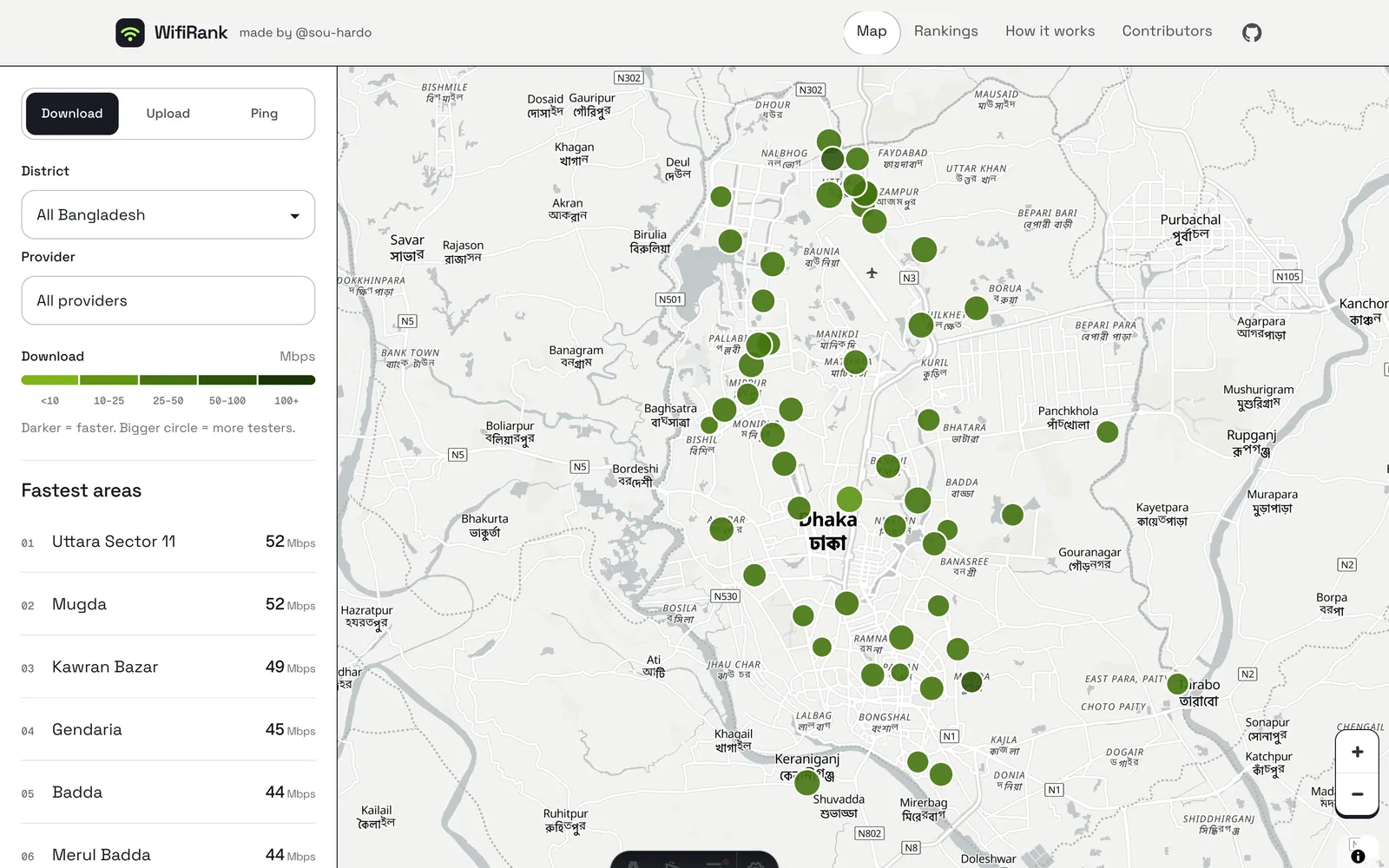
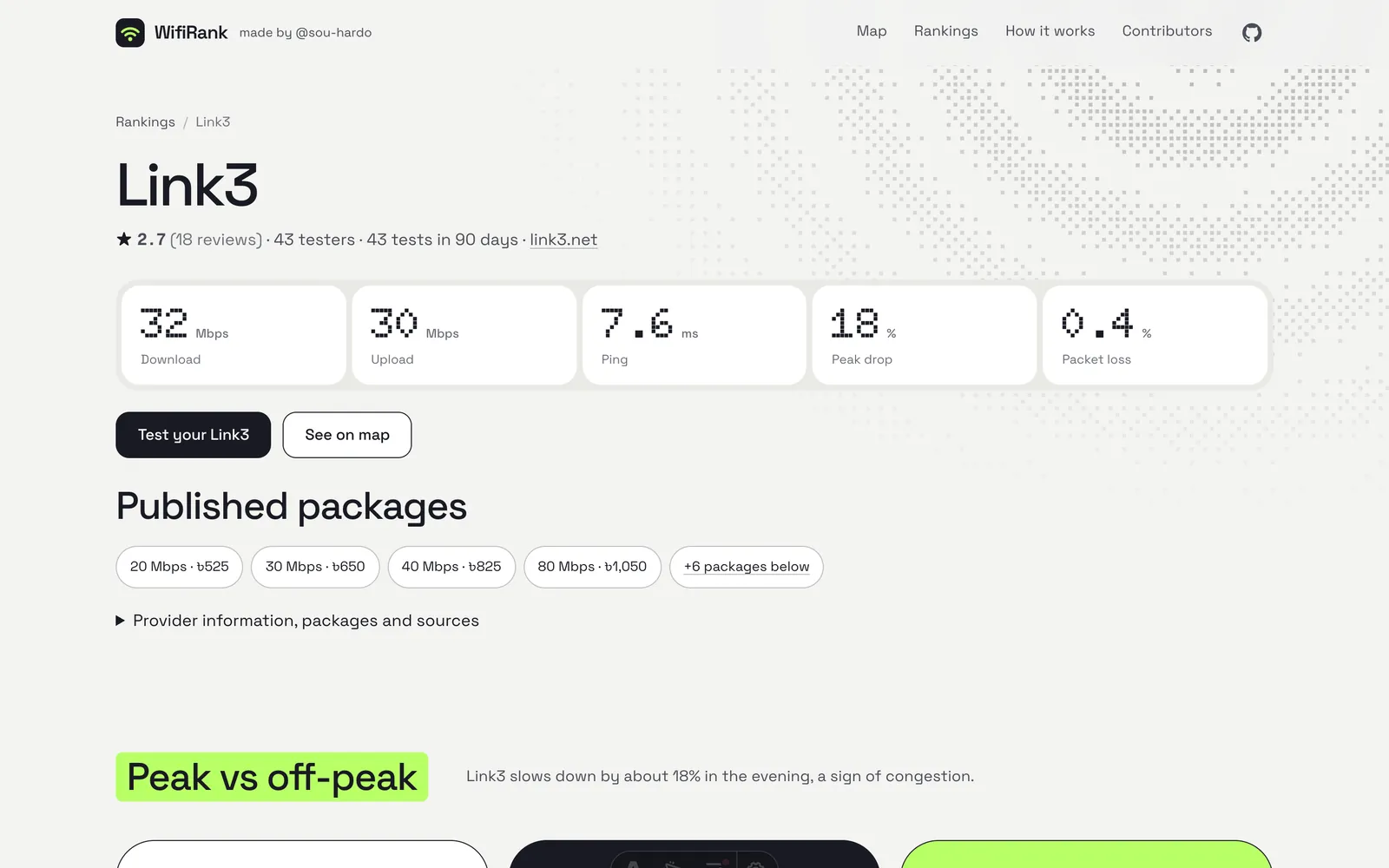
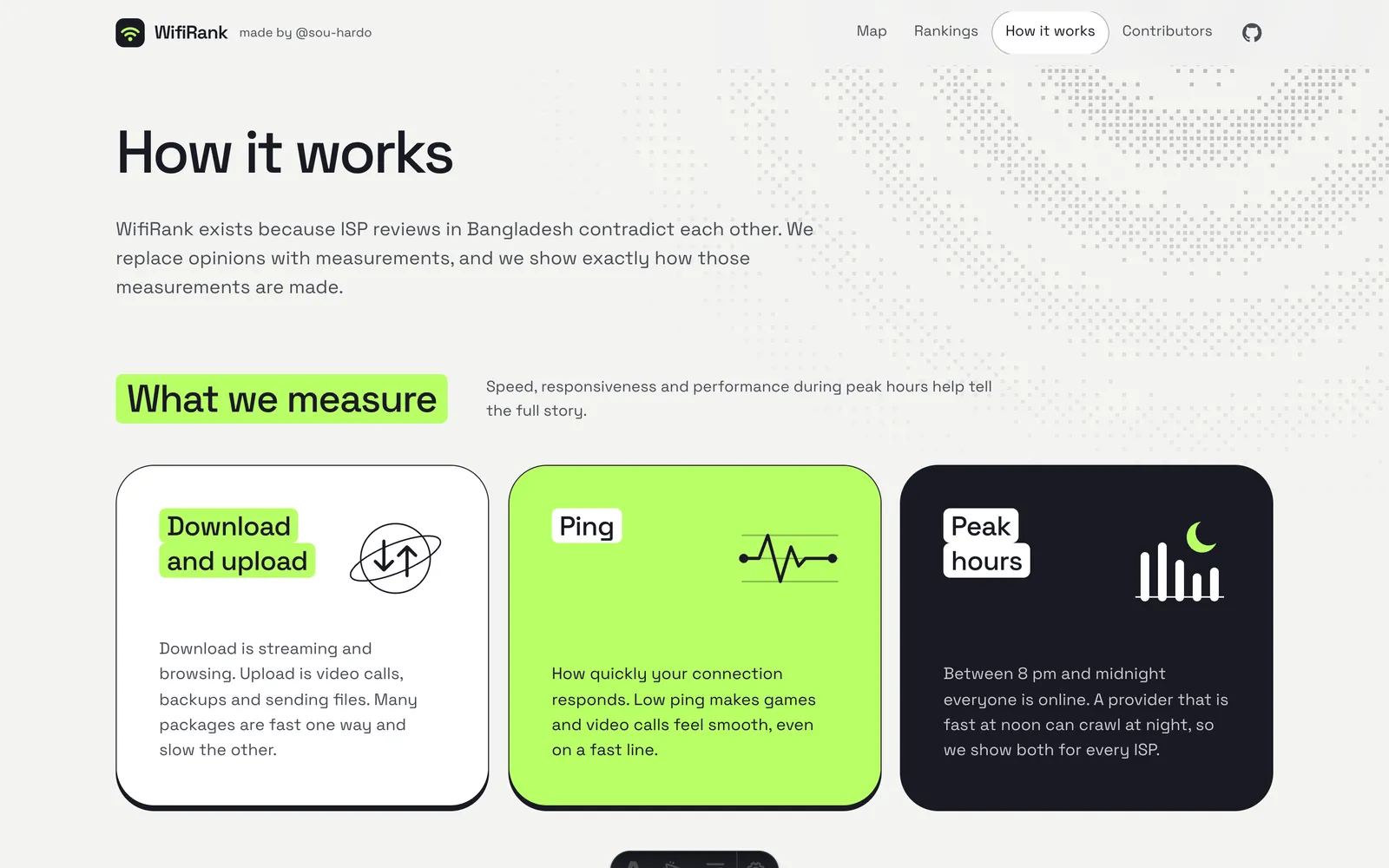
Hover to spread the screens, click one to look closer, orSwipe through the screens, tap one to look closer, or flip through all 6.
Anyone can pick their provider and area, run a speed test in the browser over a live map of Dhaka, and leave a review. Results roll up into honest per-provider and per-neighbourhood rankings.
- RoleDesigned and built solo
- Ownership82 of 82 commits
- StatusLive wifirank.site
- WhenOct 2026 · Personal project
In numbers
- providers in a national directory built from licence data
- 2,927
- minimum request length that counts toward sustained speed
- 250 ms
- vote per device per provider, so repeat tests can't stuff rankings
- 1
- distinct testers before a provider gets a rank
- ≥ 5
The problem
In Bangladesh, ISP reviews contradict each other and advertised speeds mean little at 9 pm. People pick a provider on word of mouth.
WifiRank replaces opinions with measurements: a real test against the domestic network path, counted fairly, shown on a map of the neighbourhoods people actually live in.
How it works
step through it · each step is a noteFrom one test to a fair ranking
- 01You pick your provider and area, and the browser runs a real test against Cloudflare's Dhaka edge, the domestic path people actually use.
- 02Speed is the median of requests that ran 250 ms or longer, not a burst-friendly 90th percentile.
- 03The connection is checked: tests over mobile data or a non-Bangladeshi IP are stored but never ranked.
- 04Clean tests are stored with a salted IP hash and a device id. No raw IPs, no accounts.
- 05Each device counts once: its own median first, then the median across devices over the last 90 days.
- 06A provider needs at least five testers before it's ranked.
What I built
- Designed and built the whole product: an Astro server-rendered site with React islands, Postgres on Neon, and a MapLibre map of Dhaka where packets animate between you and Cloudflare's edge while the test runs.
- Measured sustained speed (the median of requests lasting 250 ms or more) instead of the engine's default 90th percentile, which short bursts inflate.
- Wrote the aggregation SQL: per-device median, then the median across devices, over 90 days, with a five-tester minimum and peak versus off-peak comparisons.
- Built a national ISP directory of 2,927 providers from BTRC licence records and published coverage, with provenance kept for every package price.
- Added ISP detection by ASN with crowd suggestions, exclusion of mobile-data and foreign-IP tests, salted IP hashes instead of raw IPs, and per-provider OG images rendered with Satori.
Decisions
Sustained, not peak
Speed-test engines report a high percentile, so a short burst can make a congested line look fast. WifiRank takes the median of requests that ran at least 250 ms, which is closer to what streaming and downloads actually get.
One device, one vote
Each device's tests collapse to one median per provider before the cross-device median, so someone re-running a test fifty times moves the ranking no more than someone who ran it once.
Exclude, don't delete
Tests over mobile data or from a non-Bangladeshi IP are kept but left out of rankings. Fixed-wireless 5G routers are opt-in per provider, so they're counted only when they're really someone's home connection.
Guess carefully
Big upstream carriers and shared ASNs could be any of dozens of resellers, so they only trigger a warning. Crowd suggestions need three distinct IP hashes and a majority, and anything the user typed always wins.
Stack
- WebAstro (SSR), React islands, MapLibre GL, Satori
- DataPostgreSQL (Neon), PGlite for local dev, SQL aggregation
- Measurement@cloudflare/speedtest, Cloudflare TURN, ipinfo ASN lookup
- HostingVercel